*This is an amazing game that features story elements that are NOT intended for kids. If you are running this game with teens or younger, it will require adaptation. See below!

Teaching the necessary skills involved in improvisational acting requires a wide variety of different games and exercises. One of the most difficult elements of performance that students must develop to be successful is the art of supporting each other. The selfish motive of wanting the spotlight must give way to a mutual support of cast mates. In this way, a story is created that allows everyone a better staging ground to be successful. Ten Candles is an excellent one-shot game system for minimal-prep role playing experiences that reward improvisors for such selflessness. With a few modifications, this can become a reliable tool for team-building among the members of speech and drama groups.
Type of Game: Role-Playing Game
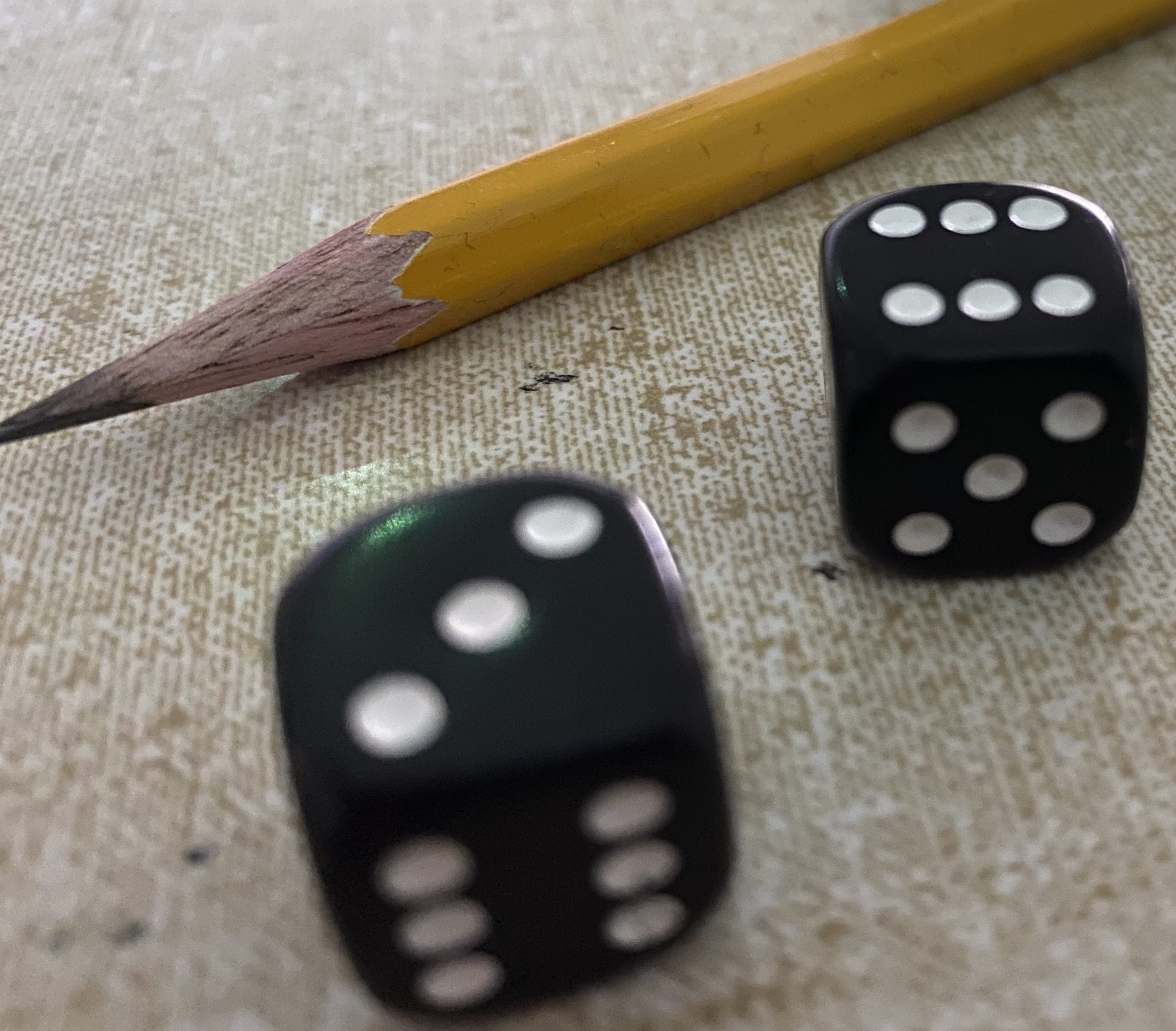
Cost: $10 digitally at https://cavalrygames.com/shop/ten-candles-pdf plus the cost of maybe 20 six-sided dice.
Recommended Age: High School and up (College and up if you play out the horror elements in the way the game suggests!)
Group Size: I’ve run this game with as few as 7 and as many as 11 students.
Time: Maybe 90 minutes if the dice roll terribly. More likely to last 2 hours or more.
Developed Skills:
- Focus
- Collective Storytelling
- Character Development
- Team-Building
- Decision-Making
The Game
As a role-playing experience Ten Candles is different from most rpg’s in a few useful ways.
- There are no character sheets. The creation of a few simple character concepts help players forge an identity. The cards that these character traits are written on can also be destroyed to change the direction of a story.
- There are no inequalities among players. The players all share one dice pool of ten D6’s to overcome challenges. Rolling even one 6 on any die means the characters overcome a given challenge. But dice will disappear over time, making each choice the characters make an increasingly stressful team effort.
- The characters’ situation is guaranteed to become more dire over time. The game plays out over ten scenes, and scenes only end after a character fails a roll. With each passing scene, a die is removed permanently from the pool. This makes the later scenes truly nail-biting affairs.
- There is no “winning.” The game is designed to end with the last failure of the characters, so Ten Candles is ultimately a story about what you do with your last moments. Believe it or not this actually takes a load off of players because they don’t have to worry about “beating” the game and can instead focus on building a great story together. Our mission statement during this game is always “We win when we tell a great story.”
- Players help create and develop the world with the game master. Between scenes, the game master and each player takes a turn establishing “truths” about the story. These could be as simple as “my character is scared” or as wide-sweeping as “the monsters are invading every city on earth.” The purpose of these truths is to create the most satisfying story possible. This mechanic is as wonderful as it is potentially dangerous, as a player who wants to survive at all cost may try to ruin the challenge with something like “Everyone wakes up and things are ok.” GM’s should reserve the right to suggest edits or replace truths until players understand their true narrative potential.
Because of these fairly unusual elements, Ten Candles has something of a learning curve for players. Once a single game has been played, the system can be used again and again with ease. To help you get started, There is a compelling (and harrowing) playlist of Ten Candles games performed by Geek & Sundry that I highly recommend watching for a crash course into the game system. This video series has mature themes though and contains story events that we’d never encourage in a classroom or school club setting!
Making it work for Class
The Ten Candles game system is so simple and effective that this game should be much, much more popular than it is! I think one element that contributes to the games lack of widespread appeal is that the story elements of the game are daaaaaaaaaark.
I’ve been trying to get a group of my 30-something friends together to play this game for months now, but in the meantime I’ve adapted it for my teenage improvisors as a way to sharpen their skills.
Departing from the games main premise, I instead run the system as part of a thriller/action adventure with light horror elements. As the dice are removed, the players come closer to the climax of the story; when the last die is rolled, win or lose, the “rescue” arrives and the story ends. In this way, the game becomes more enjoyable even as it sometimes sacrifices the catharsis that the games creators intended (we’ve still experienced some epic climaxes anyway!)
Why It’s Fun
The less that stands between your players and the game, the better! The “character creation” portion only lasts a few minutes and then the story begins. A group that becomes accustomed to playing can spend much less time fretting about character stats and more time engaged in your world.
Some Educational Uses
- As I said, this game is perfect for teaching the skills of improv. Since we are playing in an educational setting, I never confront the players with an insurmountable challenge. Over time, I reward smart solutions and teamwork with levels of success.
- I imagine that an enterprising writing teacher could adapt this game as a way to get the blood flowing on the creative process. This would likely require a few days to fully realize with a larger class, as students would have to be divided up into manageable groups and a game master would have to be trained for each table. What an amazing way to write a story together, though!

 Adventure School: Gaming in The Classroom
You must be logged in to post a comment.